What's Included in a Website Design Package
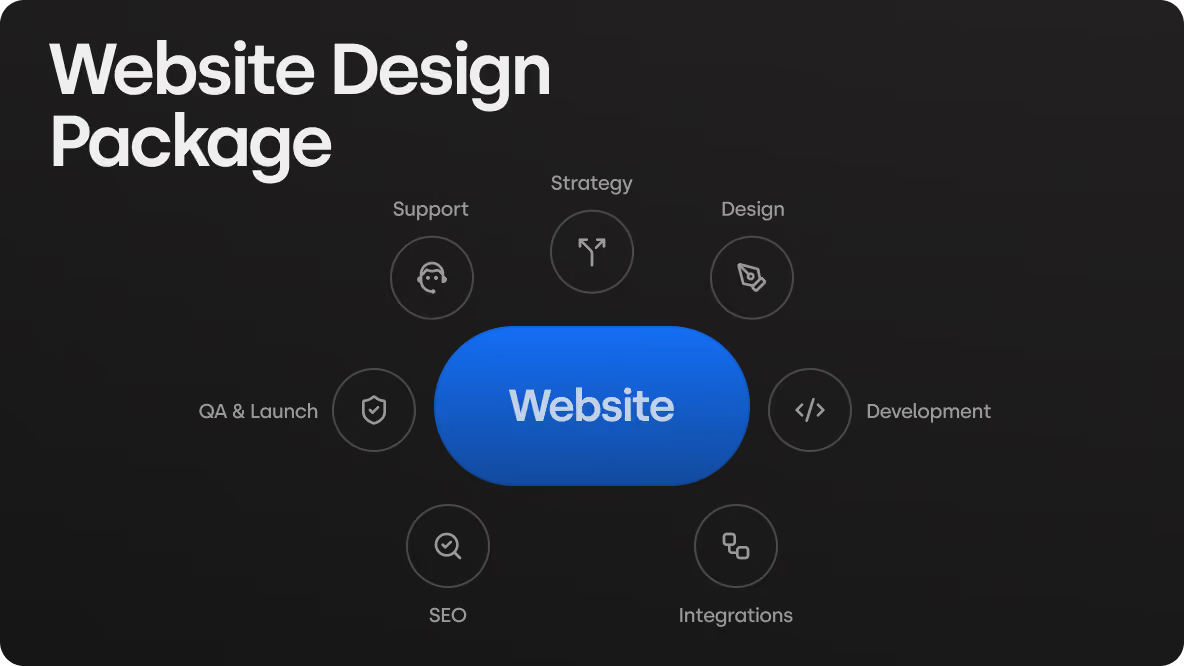
A website design package is more than a homepage and a contact form. At minimum, it should cover discovery and strategy, custom design, development on a CMS, on-page SEO foundations, integrations, QA testing, and a defined support window after launch, running anywhere from around $500 for a template-based starter site to $30,000+ for a fully custom enterprise build. The real difference isn't the feature list itself, but the level of detail within each deliverable and what gets left out of the scope.
We've built 100+ Webflow projects. The gap we see on nearly every call with a prospective client isn't the page count on their old quote, it's that two proposals with the same page count cover completely different scope, at completely different price points, for completely different reasons. This article breaks down every package type on the market, what each should include and cost, who each one actually fits, and the specific things agencies leave out that end up costing you six months in.
What is a website design package?
A website design package is a bundled scope of design, development, and launch services sold at a fixed or ranged price, instead of an open-ended hourly quote. The purpose is predictability: you know roughly what you're getting and what it costs before work starts. The word "package" doesn't mean identical output for every buyer, it means the provider has grouped a defined level of strategy, design, development, and support into a comparable offer.
The website design packages and pricing ranges mentioned throughout this article are intended as general examples of how web design services are commonly packaged and priced across the market. They are not limited to Webflow or any other specific technology stack. The actual scope, deliverables, and cost can vary depending on the platform, technical requirements, project complexity, and provider.
The 7 things a real design package includes
Any comprehensive web package covers these seven core areas, each carrying its own cost weight and audience focus. If a proposal leaves out more than one or two, request clarification before signing.
1. Discovery and strategy
A structured intake covering your goals, audience, competitors, and content needs, producing a sitemap and information architecture, the actual plan the rest of the build follows. Expect $0–$1,500 depending on how formal the process is; smaller agencies often fold it into the base price, larger ones scope it separately.
Best for: anyone building a new site from scratch, or any business with more than one real audience segment. This step is particularly critical if your site serves distinct groups—for example, both prospective buyers and job applicants.
2. Custom design
Real design work means layout, typography, color system, and component decisions made specifically for your brand, shown as clickable mockups before development starts.
- Semi-custom design (a strong template adapted to your brand): $500–$2,500
- Fully custom UI design (includes UX/UI research and 2 rounds of revisions): $2,000–$10,000+ depending on page count and complexity.
Best for: Fully custom design matters most for companies where the site is a primary trust signal: fintech, SaaS selling to enterprise buyers, or anyone competing against better-funded competitors on brand perception.
3. Development and CMS setup
Pages get built on Webflow, WordPress, Shopify, or custom code, with a content model your team can edit without calling a developer for routine changes.
Development typically runs $1,500–$8,000+ depending on the platform, page count, and whether it's template-based or fully custom-coded from a design system.
Best for: any business planning to publish content regularly, blog posts, case studies, job listings, needs a real CMS here, not a set of static pages a developer edits by hand.
Skywwward tip: before you sign, ask what happens when you want to add a new type of content later, a new case study format, a new product line. If the answer requires rebuilding the CMS structure, the architecture wasn't built to scale.
4. On-page SEO foundations
Meta titles, meta descriptions, clean URLs, heading hierarchy, alt text, and a submitted XML sitemap, technical setup, not a ranking campaign.
This runs $300–$1,500 as a one-time setup; ongoing SEO (content, links, keyword targeting) is a separate service running $500–$5,000+/month.
Best for: every business, honestly — this is the cheapest, highest-leverage line item on the list, and skipping it to save a few hundred dollars is the single most common mistake we see in old sites we migrate.
5. Integrations and lead capture
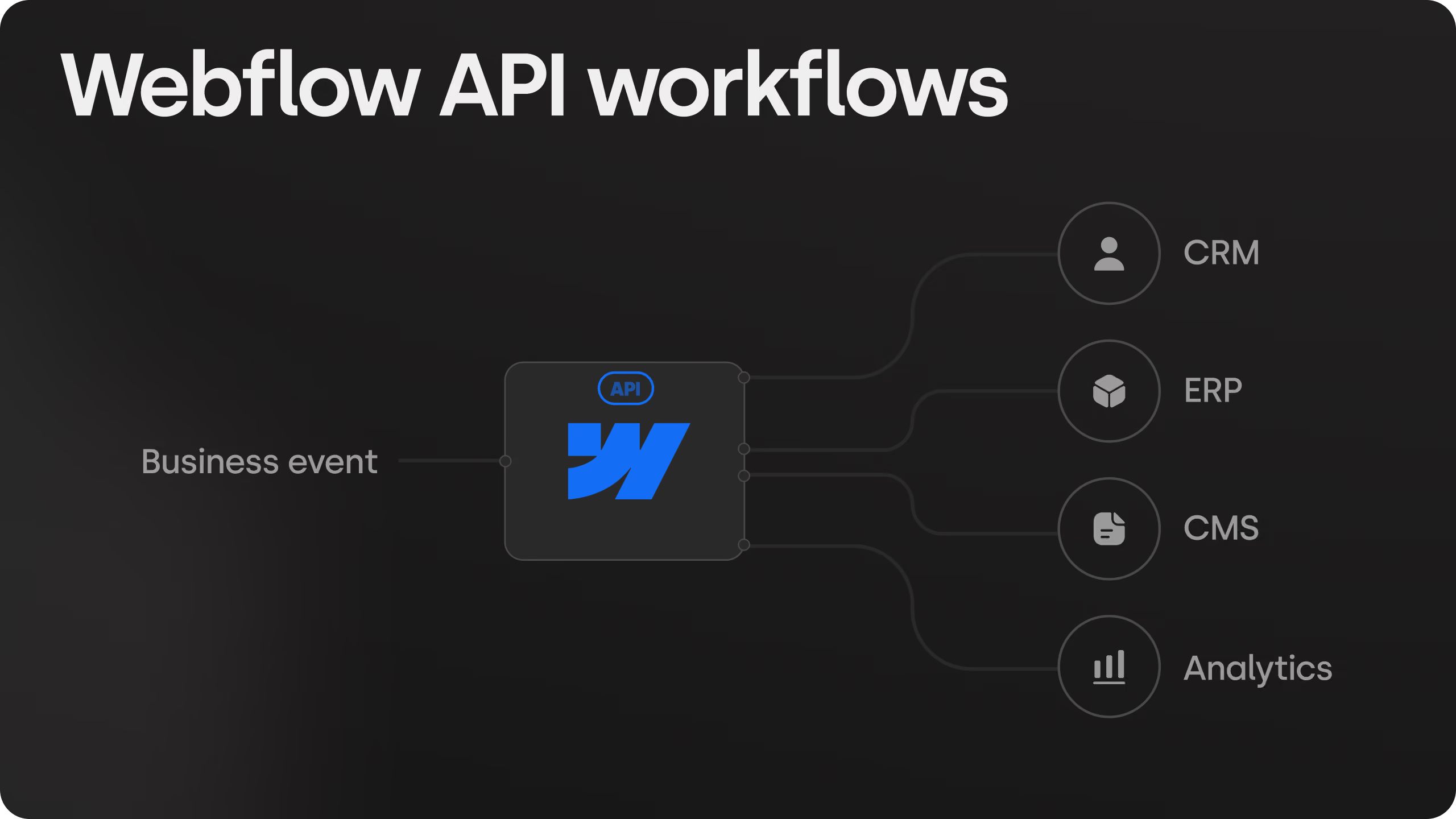
Contact forms, CRM connections (HubSpot, Salesforce, Pipedrive), analytics (GA4, Search Console, Tag Manager), booking tools, and payment processors.
Straightforward form-and-analytics setup runs $200–$800; CRM or payment integrations run $500–$3,000+ depending on complexity.
Best for: B2B companies running any kind of structured sales process with medium-level lead volumes. This is typically the scenario when you have a sales team of up to 3 members, where lead classification, capture, and assignment must work automatically to keep the workflow structured. It also ensures the full sales cycle overview remains visible across multiple divisions and verticals. The focus here is scalability for the long run, not necessarily short-term fixes with template-based designs.
6. QA testing and launch
Cross-browser and cross-device testing, broken-link checks, form testing, and the actual domain and hosting deployment.
Usually bundled into the build cost rather than priced separately, though redirect mapping for a migration can add $500–$2,000 depending on the size of the existing site.
Best for: every launch, no exceptions — but especially any site replacing an existing one with real search traffic, where a missed redirect can cost months of rankings.
7. Training and support
A handover session or recorded walkthrough plus a defined support window after launch. Ranges from a single unrecorded call (often free) to structured recorded training with 30+ days of post-launch support, which agencies typically price into the overall build rather than list separately.
Best for: any team that doesn't have an in-house developer, without this, every future text change becomes a support ticket.
Every type of website design package, explained
Not every business needs the same scope, and pricing shifts a lot by type, not just by page count. Here's how the market segments packages, what each one costs, and who it's actually built for.
Starter / landing page package — $500–$2,000
Usually 1–5 pages, a customized template or lightweight custom design, mobile responsiveness, one contact form, and basic on-page SEO, with revisions typically capped at one round.
Best for: solopreneurs, new businesses, or a single-purpose launch that needs a credible presence fast without a blog, case studies, or integrations yet.
Skywwward tip: this is the one tier where a template genuinely makes sense, don't overpay for custom design at this stage if the real goal is speed to market.
Standard / business package — $2,000–$5,000
5–15 pages, a more custom UI, a blog or resources section, CRM or email integration, fuller SEO setup, and analytics tracking. Client training is usually included because the site is complex enough that someone on your team needs to manage it long-term.
Best for: small-to-midsize businesses that have outgrown a starter site and need a blog or lead capture that actually feeds a sales process.
Skywwward tip: this is the tier where scope creep hits hardest — a "10-page site" quietly becomes 18 pages because nobody defined the sitemap upfront. Lock the page list before design starts.
Growth / lead-generation package — $5,000–$10,000
In a lead generation or growth package, the main focus is demand generation and automation. In general, these websites are less about aesthetics and more about pragmatism. This automatically involves deeper discovery, conversion-focused UX/UI research (trust signals, structured CTAs, service architecture, buyer personas, etc.), landing pages for paid campaigns, and more advanced tracking. This tier suits companies actively running demand generation and needing the site to perform as a sales asset or full acquisition channel, rather than just a branding asset with a few landing pages.
Best for: companies actively running demand generation that need the site to perform as a sales asset, this is usually the entry point for SaaS and fintech clients we work with.
E-commerce package — $3,000–$20,000+
Product catalog, shopping cart, secure checkout, payment gateway integration, shipping and tax configuration, inventory management, and customer accounts. Complexity — and price — scales fast with product count, subscription logic, or ERP/stock integrations.
Best for: any business selling products directly online, from a small shop with a handful of SKUs to a catalog running into the thousands.
Custom / enterprise package — $10,000–$30,000+
Fully custom design system, complex CMS architecture, multiple integrations, multilingual or multi-domain setups, advanced animation, and a long-term partnership model rather than a one-off engagement. This is one of our highest-demanded packages and a preferred model at Skywwward, since many of our clients require complex, unique solutions tailored to their actual needs.
Best for: Companies where the website functions closer to a digital product infrastructure than a traditional marketing surface, while still serving as a core acquisition channel. This is where fixed "packages" stop making sense and scoped, discovery-led quotes take over. These projects generally involve higher budgets, tailored solutions for specific tech stacks, and vertical needs across multiple departments that benefit from the new website.
Website redesign package — $2,500–$15,000+
While the package name might give the impression that it is just a visual refresh or facelift, this generally involves a more pragmatic approach with a strong focus on fulfilling business gaps identified from past data. It also optimizes existing assets, addresses technical gaps such as architectural problems and UX/UI design issues, and incorporates best practices from successful case studies and use cases.
Key activities include content auditing, a new information architecture, URL mapping, 301 redirects, and analytics validation to protect existing search rankings and traffic during migration.
Best for: Any business replacing or optimizing a live site that already has an online presence. The redesign itself is often the easy part; protecting existing rankings and organic performance during the switch is where projects become more complicated, requiring extensive experience in successful website migrations and redesigns.
Branding + website package — $3,000–$15,000+
Combines logo design, visual identity, messaging, and brand guidelines with the website build.
Best for: businesses with no established identity yet, or going through a full rebrand where design and messaging need to be built together rather than sequenced badly.
Website + SEO package — varies, foundation vs. retainer priced separately
Bundles keyword research, page mapping, technical SEO setup, and content planning into the build phase, rather than treating SEO as an afterthought bolted onto a finished site.
Best for: any business where organic search is a primary acquisition channel, planning for it during the build is dramatically cheaper than retrofitting it later.
Skywwward tip: confirm whether "SEO included" means foundational technical setup (one-time) or an ongoing monthly campaign (recurring), they're sold under the same label constantly and priced completely differently.
Monthly / subscription package — $150–$600+/month
The build, hosting, maintenance, and support get bundled into one recurring fee instead of a fixed upfront cost.
Best for: businesses that want to avoid a large upfront outlay, or that expect the site to need continuous small changes rather than a one-time launch.
Skywwward tip: confirm ownership terms before signing, some subscription models mean you own the site outright once built, others operate closer to a rental where the site stops being usable if payments stop. Get this in writing, not verbally.
Maintenance / retainer package — $75–$500+/month
Not a design package on its own, but almost always sold alongside one. Software updates, security monitoring, backups, uptime checks, and a defined number of monthly content-update hours.
Best for: any business that relies on its website for revenue and doesn't want routine maintenance to fall on someone's already-full plate.
Skywwward tip: ask exactly how many hours of content updates are included and what happens past that, because mostly vague "unlimited small changes" language is often unlimited until it isn't.
The full picture at a glance
Here's how everything above summarizes, useful for comparing quotes side by side, not a substitute for the detail above.
By package tier:
By individual service, if priced separately:
By pricing model:
- Hourly rates ($50–$200+/hr): flexible but unpredictable — needs a tightly scoped brief to avoid runaway costs.
- Fixed project fee: one price for defined deliverables. Predictable, but only as good as the written scope behind it.
- Retainer: a set monthly fee for ongoing design and dev capacity — suits companies that need continuous iteration, not a one-time launch.
- Value-based pricing: priced against expected business impact rather than hours or deliverables. Less predictable upfront, but aligns incentives if both sides trust the estimate.
Treat every number above as a planning range, not a quote. The honest answer to "how much does a website design package cost" is always "it depends on scope" — an agency quoting a firm number before a discovery call is guessing, and that guess is usually wrong in one direction or the other.
Page count isn't template count
This is the detail that makes two "same size" quotes incomparable. A 20-page proposal might reuse three or four repeatable templates — service pages, blog posts, case studies — which is efficient and shouldn't cost 20x a homepage. A 10-page proposal where every page has a genuinely different layout is more design work than it looks on paper. Ask directly: how many unique templates are being designed, not just how many pages are listed. This one question exposes more pricing inconsistency than anything else on a quote.
Hidden Web Design Costs: What to Look Out For
This is where fixed-price quotes stop being comparable, and where most post-launch conflict comes from.
- Copywriting. Most packages assume you supply the text. "Content included" sometimes just means pasting your draft into the layout, not writing it from scratch — confirm which one you're getting, since writing costs $150–$600+ per page if it's not.
- Ongoing edits after launch. Can your team change a headline or swap a photo themselves, or does every tweak go back to the agency on an hourly rate?
- Code and asset ownership. Some agencies keep the build locked to their own account. Confirm in writing that you own the domain, the CMS, and the finished source files.
- Hosting renewal pricing. Year one is often bundled; year two bills at a different, sometimes much higher, rate. Get that number in writing before you sign.
- E-commerce fees. Transaction fees, platform costs, and payment processor charges compound monthly and are easy to underestimate at signing.
- SEO migration. If you're replacing an existing site, redirect mapping and ranking preservation need to be explicitly scoped — not assumed, and not free.
- Branding. Most website packages assume a logo and brand guidelines already exist. If they don't, that's a separate $500–$4,000+ line item.
None of this is dishonest by default. The problem is when it surfaces after the deposit, not before.
Understanding the Real Value of Web Design
It's easy to compare packages purely on price, but the cheaper quote is rarely the cheaper outcome. A $1,500 starter site that's missing SEO foundations, a real CMS, or any support window often costs more within a year, in developer hours to fix problems, in lost traffic from a bad migration, or in the opportunity cost of a site that doesn't convert.
Three things actually determine the value of a package, beyond the number on the invoice:
Quality of the work.
Look at the agency's past builds, not just the pitch. Are the sites they've shipped fast, clean, and easy to navigate — or do they look good in a screenshot and slow in a browser?
Support when something goes wrong.
How fast does the team respond to a question? Is there a real support window after launch, or does the relationship end the day the site goes live?
Business impact, not just aesthetics.
A website's job is to bring in leads, sales, or awareness, not just to look modern. The best-looking site that doesn't convert is a worse investment than a plainer one that does.
The cheapest option isn't the best value, and the most expensive one isn't automatically either. Value is the ratio between what you paid and what the site actually does for the business over the following year, not the sticker price alone.
How to Choose the Right Web Designer
Once you know roughly what you need and what you're prepared to spend, the designer or agency you choose matters more than the specific package tier.
Experience and relevant work. Ask if they've built sites like the one you're imagining, not just "nice websites," but sites in your industry, at your complexity level, solving problems similar to yours.
Communication. You should be able to ask a direct question and get a direct answer, not a vague reassurance. If a proposal call already feels evasive, the project will too.
Transparent pricing. Be wary of anyone unwilling to explain exactly what a number covers. Clear pricing with a written scope is a stronger signal than a lower number with a vague one.
Client feedback. Look for comments specifically about communication, project management, and whether the finished site matched what was promised, not just "they were nice to work with."
Practical fit. How fast can they realistically deliver? What does support look like after launch? What platform do they build on, and can the site grow as your business does?
Picking the Right Web Design Package
Bringing it together: the right package is the one that matches your goals, your budget, and your team's technical capacity — not the one with the most features or the lowest price.
Start with your goals, not the price list. Are you generating leads, selling products, building credibility, or replacing a site that's actively losing you traffic? That answer alone rules out most of the tiers above.
Be realistic about your budget, and prioritize. Decide what your site absolutely needs on day one, and what can be added once it's live. A starter site with a clear plan to grow beats an over-scoped build that stalls halfway through because the budget ran out.
Match your technical comfort level. If your team is comfortable managing content independently, a strong CMS and solid training matter more than a huge page count. If you need a partner who handles everything, factor ongoing support and retainer costs into the real cost of the site, not just the launch price.
Plan one step ahead, not five. Choose a package that can grow — more pages, a blog, e-commerce later — without requiring a full rebuild. The cheapest package now isn't a good deal if it forces a from-scratch rebuild in eighteen months.
There's no universally "best" package. There's the one that's honestly scoped for what your business actually needs right now, with a clear, written path to what it'll need next.
How Skywwward scopes a package
We don't sell templated tiers, because a fintech rebuild and a SaaS migration need genuinely different things from day one. Every project is a fully custom Webflow build, no theme, no template, priced on the actual scope after a discovery call, not a generic page-count formula.
What's standard on every project regardless of size:
- Full code and asset ownership transferred to you at handover, nothing stays locked to our account
- 50/50 project pricing, so you're not funding the entire build before you've seen work
- Recorded, one-on-one team training so your team can run the CMS without coming back to us for routine edits
- 30 days of post-launch support to handle whatever surfaces once real traffic hits the site
- SEO foundation and documented integrations built in from the start, not patched on afterward
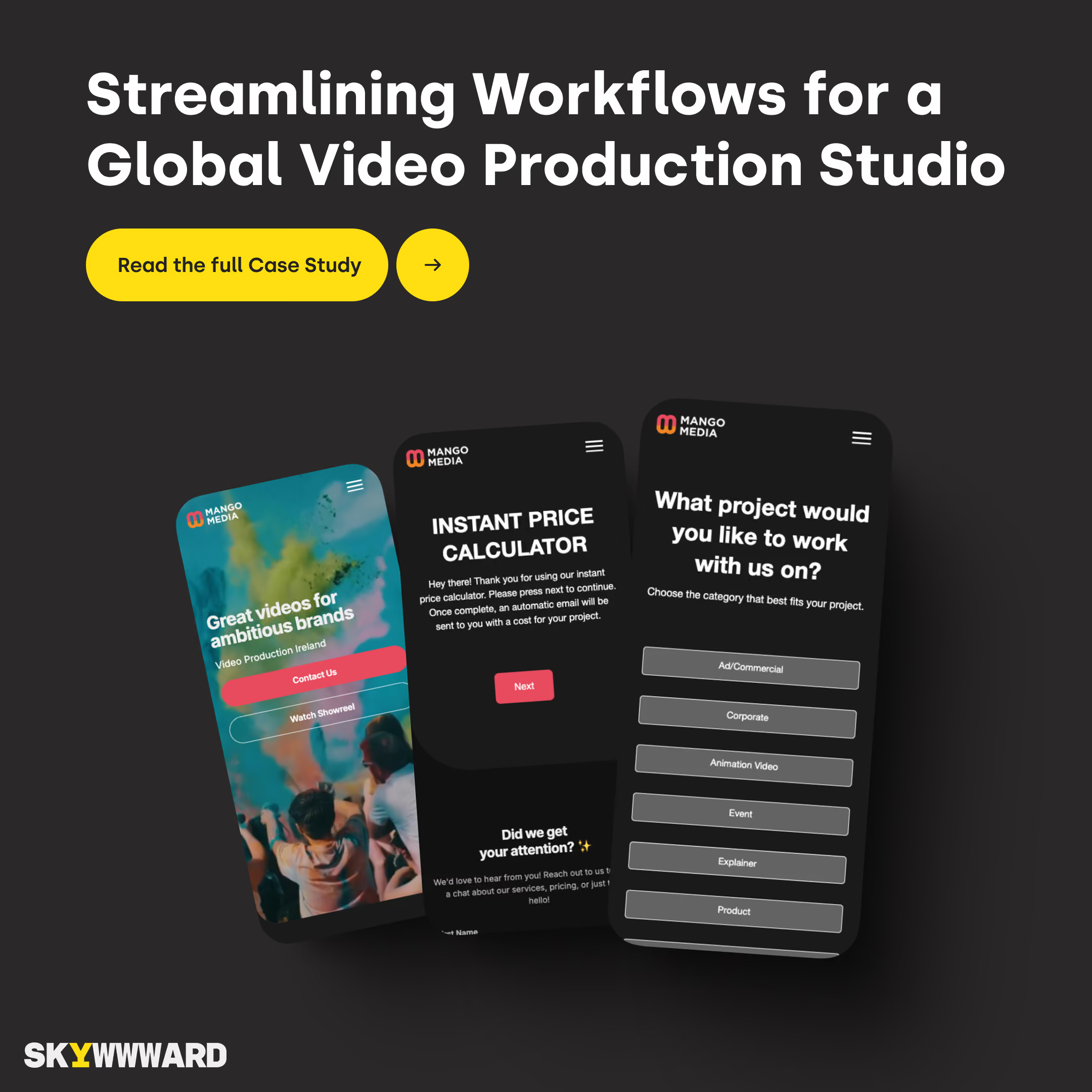
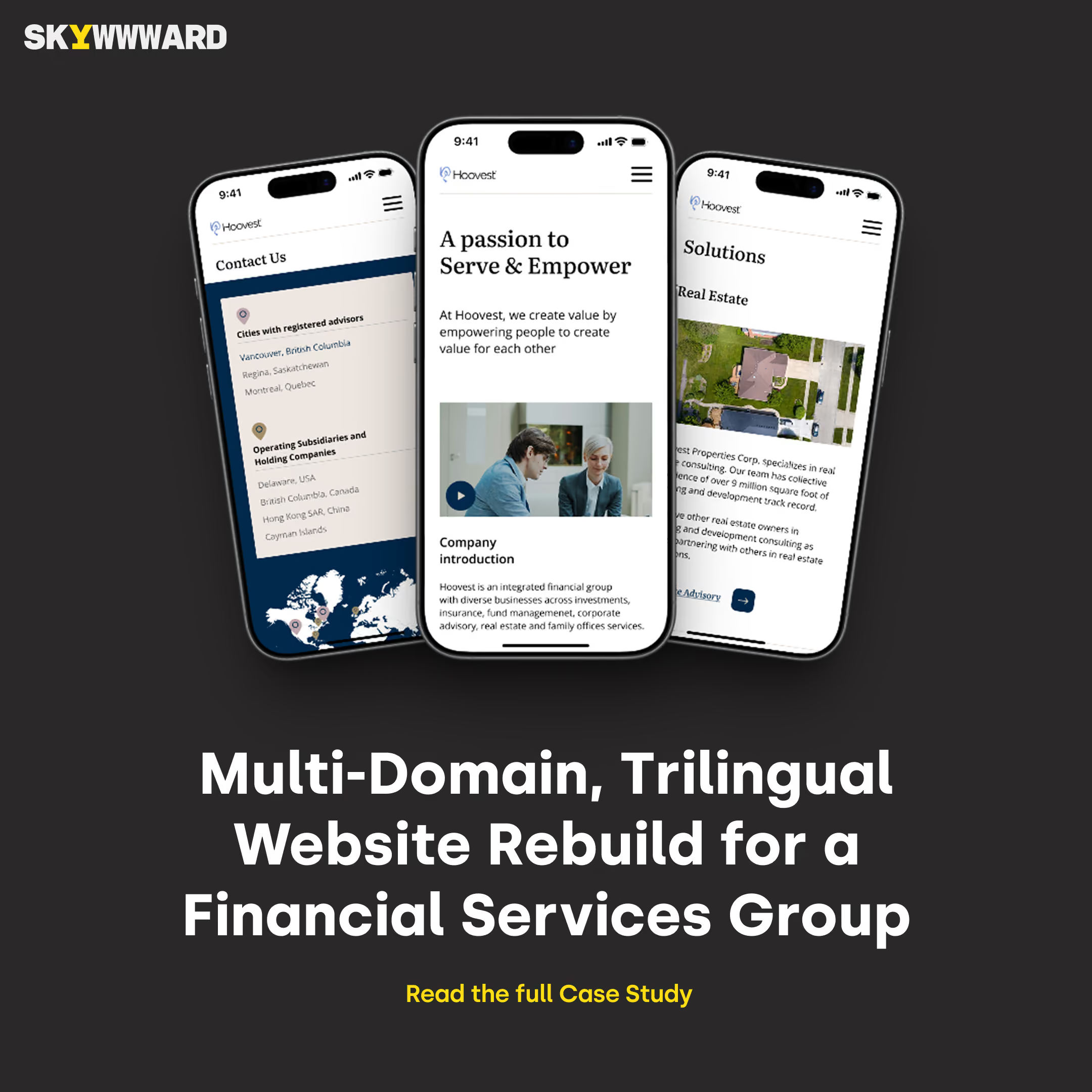
Across 100+ projects, that approach has held up: 95% client NPS, 85% retention, and 3M+ yearly traffic running across the sites we've built. That includes work like Opencare's Salesforce-integrated lead automation build, Hoovest's trilingual multi-domain rebuild, and Mango Media's pricing-calculator-driven Webflow site — each scoped around a different technical requirement, not a shared template. Those numbers exist because scope was locked before development started, not because the build happened to go well by chance.
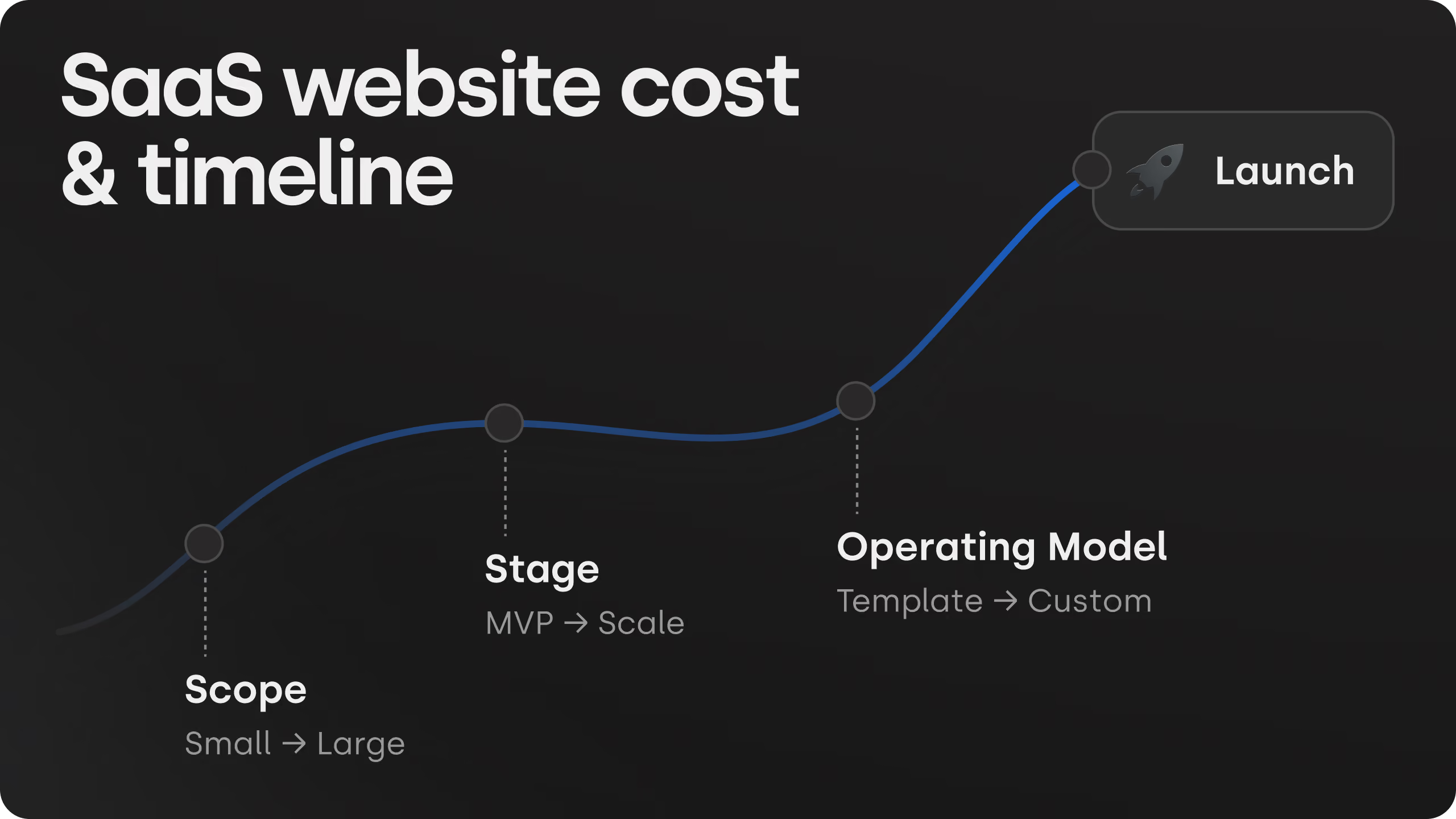
Realistic timelines
Delays are almost never about development speed, they're predictable and come from the same handful of causes:
- Content not ready (copy, imagery, approvals)
- Too many stakeholders with no single decision-owner
- Scope creep — new pages or features added mid-build
- Unclear priorities, trying to serve every audience segment at once
Separate production time (the actual strategy, design, development, and testing work) from calendar time (the full project span including your feedback and content delivery). A five-week production timeline can easily stretch into a three-month calendar timeline if content and sign-off are slow, that's on process, not on the build itself.
Conclusion
A website design package can mean a $500 template swap or a $30,000 custom build — the label alone tells you almost nothing. What actually determines whether you get a good outcome is whether the scope is written down: which of the seven core elements are included, what's explicitly excluded, who owns the finished site, and what support looks like once real traffic hits it.
None of that requires expensive taste or deep technical knowledge to check. It requires a proposal specific enough to hold the agency to it, and a few direct questions before you sign — page list versus template count, redirect plans if you're migrating, ownership of the domain and code, and what happens after launch. Agencies that can't answer those clearly aren't the ones worth paying more for.
If you're comparing quotes and want a scope that's written down in full before you commit to anything, get in touch with Skywwward for a project quote.
.avif)


Frequently asked questions
What is included in a website design package?
A complete package includes discovery and sitemap planning, custom UI design, development on a CMS, mobile-responsive layout, on-page SEO setup, contact forms and integrations, QA testing across browsers and devices, and training or support after launch. Copywriting, hosting renewals, and ongoing content edits are commonly billed separately unless explicitly stated.
How much does a website design package cost?
Anywhere from $500 for a template-based starter site to $30,000+ for a fully custom enterprise build. Standard small business packages typically run $2,000–$5,000; e-commerce builds run $3,000–$20,000+ depending on product count and integrations. Get a scoped quote rather than relying on a general range.
What's the difference between a website design package and custom website design?
A "package" usually implies a defined, semi-standardized scope at a set price point. Custom website design means every layout, component, and interaction is built specifically for your brand rather than adapted from a template. Agencies that only do custom work, like Skywwward, still scope projects individually rather than selling fixed tiers, the term "package" describes the buying experience, not the build method.
Does a website design package include hosting?
Sometimes for the first year, sometimes not at all. Confirm the hosting provider, the renewal price after year one, who holds the account, and whether backups and SSL are included before you sign.
Do I own the website after it's built?
Not automatically. Some agencies retain control of the CMS account or source files. Ask specifically whether the domain, hosting account, code, and content transfer fully to you at handover, at Skywwward, that full transfer is standard on every project.
How many revisions are normal?
Most professional builds include two to three structured revision rounds tied to specific milestones — wireframes, then design, then build — rather than unlimited open-ended changes. Ongoing edits after launch are a separate question from build-phase revisions, and should be scoped separately.
What should an e-commerce website package include?
Product and category templates, payment gateway integration, shipping and tax configuration, checkout flow, customer accounts, transaction emails, inventory handling, and basic analytics. Bulk product entry, ERP integrations, and ongoing marketing are usually additional.
Can website design and SEO be purchased together?
Yes, and it often produces a better outcome, since keyword research and page structure can be planned before development instead of retrofitted. Confirm whether "SEO included" means foundational technical setup or an ongoing monthly campaign — they're priced and delivered very differently.
How long does a website design project take?
Production time for a standard business site typically runs 4–8 weeks; custom or enterprise builds run longer. Calendar time — the full span including your content delivery and feedback rounds — is often double the production estimate if approvals are slow.
What questions should I ask before signing a website design proposal?
Ask what's explicitly excluded, who owns the domain and code after launch, whether SEO migration is included if you're replacing an existing site, how many unique templates (not just pages) are being designed, and what support looks like after launch.