Custom Webflow Website for SaaS Startup: Cost and Timeline (2026)
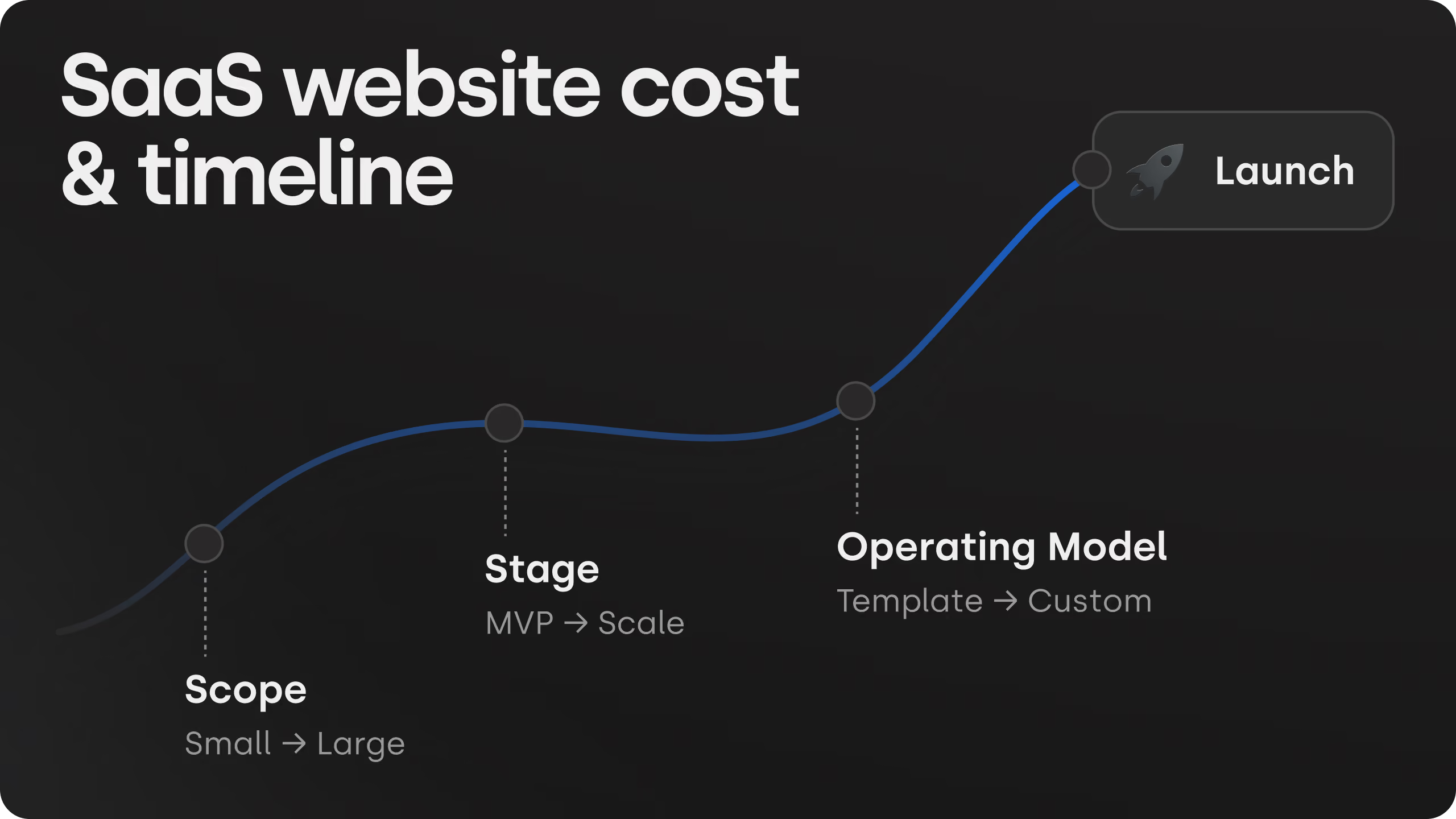
Building a custom Webflow website for a SaaS startup in 2026 typically costs between $1,500 and $30,000+ and takes 1 to 13 weeks from kickoff to launch. The final number depends less on Webflow itself and more on the route you choose: DIY template, freelancer, boutique agency, mid-market agency, enterprise agency, or ongoing design subscription.
That distinction matters because these are not interchangeable options. A $500 template can get a site live quickly, but it will not give you a scalable content system, conversion-led page structure, or buyer journey built around how SaaS prospects evaluate software. A freelancer can be a strong fit for a defined early-stage scope, but coordination, availability, and technical depth become real risks once the site needs integrations, CMS architecture, and post-launch reliability. A specialized Webflow agency costs more, but the value is usually in the architecture behind the site: information structure, reusable components, CMS logic, SEO foundations, integrations, QA, training, and ownership transfer.
For SaaS companies, the website is rarely just a visual asset. It is often the first credibility checkpoint before a buyer books a demo, the foundation for SEO and content marketing, and the operational system your marketing team uses to launch pages, publish resources, support campaigns, and convert demand. That matters because SaaS buyers are doing more of the evaluation independently: Gartner found that 61% of B2B buyers prefer an overall rep-free buying experience, while other research found that 69% of the purchase process happens before buyers engage with sellers. By the time a buyer reaches out, 81% have already chosen a preferred vendor and 85% have already established their purchase requirements. The website therefore does more than explain the product. It shapes trust, preference, and commercial readiness before the first sales conversation happens.
This article breaks down what a custom Webflow website actually costs in 2026, how long each route realistically takes, what is included at each price point, where hidden costs appear, and how to choose the right investment level based on your stage, scope, and growth needs.
Cost and Timeline Comparison: All Routes at a Glance
Before getting into the details of each route, here's the full picture side by side, so you can orient yourself before reading further.
Route 1: DIY Template — $150–$500 + Webflow hosting | 1–2 weeks
The fastest and cheapest option. You pick a premium Webflow template ($49–$169), customize colors, copy, and images yourself, and launch on Webflow's Premium plan ($25/mo yearly / $39 monthly). No design or development fees beyond your own time, typically 20–40 hours for a first-time builder.
What's included at this price point:
- Pre-built page layouts for homepage, features, pricing, and blog
- Webflow's visual editor for content management
- Hosting on Webflow's infrastructure (SOC 2 Type II, global CDN, SSL included)
- Basic CMS for blog posts and team pages
What's not included:
- Custom information architecture built for your ideal customer profile (ICP) and buying journey
- Scalable CMS collections for case studies, integrations pages, and product use cases
- SEO foundation beyond what the template ships with
- Integrations with your marketing stack
- Any design thinking about conversion or buyer psychology
The honest ceiling: Templates are built for generic use cases. A SaaS website needs product pages structured around how your buyers evaluate software, a pricing page that handles packaging complexity, case studies your sales team can reference in calls, and a blog your marketing team can publish independently. Most templates start breaking down structurally within the first three to six months of real use, not because they look bad, but because they weren't architected for your content model or your buyers. Properly built custom Webflow sites score 80–90 on Google PageSpeed Insights without additional optimization; template-based builds rarely reach that without significant custom work layered on top.
Expect to rebuild from scratch within 12–18 months if you go this route.
Best for: Pre-seed founders who need something live before a fundraise or pilot, with a strict budget and a clear plan to rebuild when funding comes through.
Route 2: Freelancer — $1,500–$15,000 | 4–8 weeks
The mid-range option. A Webflow freelancer gives you a custom build without agency overhead, but the range is wide enough that $1,500 and $15,000 are effectively different products. Understanding what you're actually buying at each level is how you avoid scoping a project at the wrong budget.
Junior freelancer ($1,500–$4,000):
- Template-based starting point with brand color and font customization
- Basic responsive build — desktop-first, mobile often inconsistent or unfinished
- Minimal CMS setup, typically blog only
- No discovery, no information architecture, no component system
- SEO limited to meta titles and descriptions if that
- Little to no post-launch support
- Realistic output: a presentable site that works at launch and accumulates problems within 6 months
Senior freelancer ($5,000–$15,000):
- Custom UI/UX design in Figma — homepage, product pages, pricing, about, contact
- CMS setup for blog and one or two additional content types
- Fully responsive Webflow build across desktop, tablet, and mobile
- Basic SEO metadata — titles, descriptions, Open Graph, XML sitemap
- One integration, typically HubSpot or Mailchimp form connection
- Light QA and launch support
What's typically excluded across both levels:
- Structured discovery or information architecture work
- Design system or component library documentation
- Advanced CMS architecture with multiple interrelated collections
- Multiple integrations or CRM/analytics stack setup
- Technical SEO implementation beyond metadata basics
- Post-launch support beyond a short bug-fix window
- Formal training or handover documentation
The real risk with freelancers: Coordination. If your freelancer handles design but not development — or vice versa — you're managing two contracts, two timelines, and the gap between Figma and live Webflow where most design intent quietly disappears. Availability is the other variable: one competing client emergency, and your launch slides with no team redundancy behind it.
A senior Webflow freelancer who does both design and development fluently is a legitimate option for early-stage SaaS companies with a defined scope, ready content, and no integration complexity. At the lower end of the range expect a junior build quality — functional, but lacking the architectural thinking that makes a site scalable.
Best for: Seed-stage SaaS with a tight budget, clear scope, content already written, and no complex integrations or CMS requirements.
Route 3: Webflow Agency — $2,000–$250,000+ | 1–20 weeks
"Agency" covers a wide range. A 3-person boutique studio and a 50-person full-service shop both call themselves Webflow agencies and they price, deliver, and operate completely differently. Understanding which tier you're actually talking to is the most important evaluation step most SaaS founders skip.
Boutique Agency — $2,000–$30,000 | 1–13 weeks
Small, specialized teams of 3–8 people focused on Webflow for SaaS and tech companies. The defining characteristic of a boutique agency isn't price, it's how the work is structured. You're working directly with the people building the site, not an account manager relaying messages to a team you never speak to.
What boutique agencies generally cover:
- Custom UI/UX design and Webflow development — no templates
- CMS architecture designed around your content model and publishing workflow
- Core integration setup — CRM, analytics, scheduling, tracking
- SEO foundation: metadata, schema markup, sitemap, URL structure
- Responsive build across all breakpoints
- QA and launch support
What varies between boutique agencies — and what to ask about before signing:
- Whether discovery and information architecture are included or billed separately
- Depth of post-launch support: some include a defined window, others charge by the hour after handover
- Whether code and project ownership transfers to you at completion
- Quality of handover documentation and team training
- How revisions are handled — structured rounds vs. open-ended back-and-forth that inflates the timeline
What's typically excluded: Copywriting, custom photography or illustration, backend/API development, Webflow hosting fees.
The boutique advantage: Senior execution without enterprise overhead. Faster decision-making, tighter communication loops, and a team for whom your project is a primary engagement — not one of twenty running in parallel. For SaaS companies that want a production-grade build without the process weight of a larger agency, boutique is usually the right tier.
The boutique limitation: Capacity. A boutique team handles fewer projects simultaneously, which can make availability a constraint if your timeline is compressed or your scope is unusually large. It's worth asking about current project load and team availability before committing to a start date.
When it fits: You need a fully custom build with direct access to the people doing the work, and you don't need the governance structure of a larger agency to manage the process. Scope can range from a focused 10-page site to a 25+ page growth platform — the tier isn't defined by project size, but by how the working relationship is structured.
Skywwward: Boutique Webflow Development for SaaS and Growth-Stage Tech
Skywwward is a Webflow Premium Partner studio working with SaaS, fintech, and growth-stage tech companies. A small, senior team; you work directly with Hunor (Founder, Lead Developer) and the design team throughout. No account managers, no handoffs to junior staff mid-project.
Pricing: $2,000–$30,000 | Timeline: 1–13 weeks (depending on complexity, custom requirements, revision rounds, and feedback speed.)
What's included on every project:
- Discovery, scope definition, and information architecture before any design begins
- Full custom UI/UX design in Figma — all page types, all breakpoints, reusable component library
- Webflow development: component-based desktop build reviewed on staging, then mobile adaptation reviewed separately
- CMS architecture designed around your content model — blog, case studies, resources, and more
- Interactions and animations optimized for performance across all devices
- Integration setup: HubSpot, Salesforce, Pipedrive, Segment, Stripe, Calendly, Greenhouse, Lever, GA4, GTM, Make, Zapier, OpenAI, and custom API connections
- Technical SEO foundations: metadata, schema markup, sitemap, internal linking, performance optimization
- Analytics and tracking configuration (GA4, GTM, cookie consent)
- Cross-browser and device QA before launch
- Recorded 1:1 training so your team can manage the site independently from day one
- 30 days of post-launch support with 48-hour response — included in the project fee, not billed separately
- Full code and project ownership transfer at handover — no lock-in, no retainer required
What's excluded: Copywriting, custom photography or illustration, backend/API development, Webflow hosting fees.
Pricing structure: 50/50 — half upfront, half on delivery. The second payment happens when the site is live and you're satisfied.
Who it's for: SaaS, fintech, and growth-stage tech companies that want a production-grade custom build, direct access to the people doing the work, and full ownership of what they paid for, without the overhead of a larger agency.
<highlight>
“ As the only B2B marketer on my team, I'm responsible for a lot of things — and not having to worry about the website has made my life so much easier.”
— Tamara Teofanovic, Opencare, Canada
</highlight>
Skywwward has been the agency that companies come to after being burned by a freelancer who disappeared or an agency that locked them out of their own site. The model is built around the opposite: full transparency, full ownership, and a team that's still reachable after launch. 100+ Webflow projects delivered. 95% NPS. 85% client retention. Book a 30-minute call to get a straight answer on scope, timeline, and cost for your specific project.
Mid-Market Agency — $30,000–$80,000 | 8–14 weeks
Larger teams of 10–30 people with dedicated designers, developers, strategists, and project managers. They handle more complex scopes, larger page counts, and clients with multiple stakeholders and approval layers.
What's included (in addition to boutique deliverables):
- Larger page counts — 25–60+ pages across multiple product lines or audience segments
- More complex CMS architecture — multi-reference collections, programmatic page patterns, advanced filtering
- Formal project management with structured communication cadences
- Multiple integration environments and staging workflows
- Broader integration scope including custom API connections
The mid-market tradeoff: More process, more people, more overhead. You may not work directly with the senior team members who scoped the project. Communication runs through a project manager. For SaaS companies with straightforward scopes, this tier often delivers less senior attention per dollar than a boutique agency with equivalent expertise.
When it fits: Your project involves a large page count, multiple internal stakeholders with structured approval processes, or a scope that requires dedicated project management alongside design and development. The extra process overhead is justified when coordination complexity genuinely warrants it, not before.
Enterprise Agency — $80,000–$250,000+ | 12–24 weeks
Full-service shops with 30+ people, formal QA processes, accessibility audits, multi-stakeholder governance, and Webflow Enterprise plan management. Built for Series B+ companies, multi-product platforms, and companies with regulatory or compliance requirements.
What's included:
- Multi-product or multi-site architecture
- Webflow Enterprise plan features — staged environments, custom workspace roles, advanced security
- Formal accessibility audits and compliance review
- Large-scale content migrations with full SEO preservation
- Dedicated pod of 6–10 people across strategy, design, development, and QA
- Monthly executive reporting tied to pipeline metrics
The enterprise tradeoff: Procurement complexity, longer onboarding, sign-off layers that slow execution. For most SaaS companies below Series B, the overhead adds cost and timeline without proportional value. The companies that belong here are the ones with specific technical or governance requirements that genuinely require it.
When it fits: Multi-site architecture, Webflow Enterprise plan management, regulatory compliance requirements, or a large-scale migration where the cost of getting something wrong — SEO loss, data integrity, security gaps — justifies enterprise-level QA and governance. If none of those conditions are specifically present, you're paying for overhead that doesn't benefit your project.
Route 4: SaaS Design Subscription — $5,000–$10,000/month | Ongoing
Some Webflow agencies offer subscription-based development, unlimited design and development requests for a flat monthly fee. You submit requests, they deliver in weekly cycles, and the relationship continues indefinitely rather than wrapping at launch.
What this model is good for:
- Continuous landing page creation for paid campaigns and A/B tests
- Ongoing product page updates as your SaaS evolves
- New feature pages, comparison pages, and SEO-driven content builds
- Campaign assets and conversion rate optimization work
Where it falls short: Subscription models prioritize throughput over architecture. They work well once a solid foundation exists, a properly built Webflow site with a scalable design system and clean CMS structure. They're the wrong choice for the initial build, because the economics incentivize shipping fast over building right.
Best for: Post-launch, growth-stage SaaS teams that need an ongoing Webflow development partner to support a high-velocity marketing operation, not a first build.
Agency Build: What the Timeline Actually Looks Like Week by Week
If you're going the agency route, a full SaaS website project typically moves through four phases. These timelines assume content and brand assets are ready on your side, missing copy or brand guidelines is the single most consistent cause of timeline overruns, typically adding 1–3 weeks per missing component.
Weeks 1–2: UX Strategy and Copywriting
Kickoff, competitor research, buyer journey mapping, information architecture, and sitemap. If copywriting is in scope, this is where value proposition work and page-level copy happens. This phase is where the site's commercial logic gets set, how it explains your product, who it speaks to at each stage of the buyer journey, and what actions it's designed to drive. Skipping or rushing this phase is the most common reason SaaS sites require a costly rebuild within 12–18 months.
Weeks 3–5: UI/UX Design
Wireframes, full Figma mockups, design system, and component library. Every page type gets designed across desktop and mobile breakpoints before development begins. This phase is not just visual, it's where the CMS architecture gets defined, page templates get structured, and the system your marketing team will operate after launch gets built into the design. Structured feedback rounds (typically two) happen here. Everything gets locked before development starts.
Weeks 6–9: Webflow Development
Design translated into a live, responsive Webflow site. CMS collections, custom animations, lead capture forms, integration connections, technical SEO implementation. Development typically begins on approved sections while design completes on remaining pages, keeping the overall timeline tight. This phase also covers integration setup, connecting your CRM, scheduling tools, analytics stack, and any third-party tracking.
Weeks 10–12: Testing and Launch
Cross-browser and device QA, mobile responsiveness testing, integration testing, Core Web Vitals performance review, SEO configuration audit, team training, and go-live.
Typical SaaS Website Scope: What Pages You Actually Need
A modern SaaS Webflow build typically covers these page types. Not every site needs all of them, but the more of these you're skipping, the more gaps you'll be filling manually in sales conversations:
- Homepage — value proposition, social proof, conversion paths
- Product / Features pages — what the product does, for whom, and why it's different
- Pricing page — tier comparison, enterprise plan handling, FAQ
- Use case / Industry pages — how the product maps to specific buyer contexts
- Integrations page — ecosystem credibility, filterable partner directory
- Case studies / Customer stories — proof that it works, by company type
- Blog / Resource center — SEO and content marketing engine
- About page — team, mission, why the company exists
- Careers page — recruitment, culture, open roles (often connected to Greenhouse or Lever)
- Contact / Demo request page — primary conversion point
A 10–15 page site covering the essentials (homepage, product, pricing, blog, case studies, about, contact) is the right starting scope for most seed-stage SaaS companies. Adding use case pages, an integrations directory, and a full resource library is a Series A conversation.
What Drives the Final Number Up or Down
Page count is a factor, but not the primary one. These are the variables that actually move a quote:
Pushes cost up:
- Complex CMS architecture — filtered directories, multi-reference fields, dynamic content relationships between collections
- Custom API integrations beyond standard marketing tools (HubSpot, GA4, Calendly)
- Advanced animations — GSAP scroll sequences, WebGL, parallax effects, interactive product demos
- Multi-language and localization requirements
- Migration from WordPress, HubSpot CMS, or Wix — content audit, redirect mapping, SEO preservation adds 20–40% to a comparable new build
- Copywriting in scope — typically $100–$300 per page for quality web copy
- Enterprise governance requirements — staged environments, multi-stakeholder approval workflows, accessibility audits
Doesn't justify extra cost:
- "Clean" or "minimal" visual design — simpler aesthetics don't mean simpler architecture
- Low page count with high complexity — a 10-page site with a complex integrations marketplace costs more than a 20-page standard marketing site
- Tight deadlines — rush projects command 30–50% premiums; starting 2–3 months before your intended launch date eliminates this cost entirely
Hidden costs most founders don't plan for:
- Stock photography: $10–$500 per image; most SaaS sites need 20–40 assets. Budget $500–$2,000 unless you have a custom photography shoot.
- Copywriting: Often equals or exceeds development costs when properly scoped. A 15-page site at $200/page is $3,000.
- Content delays: Missing copy at development start is the most expensive timeline problem in Webflow projects. Every week of delay costs agency time and pushes your launch.
Scope creep: Every addition after sign-off triggers a change order. A clear brief and defined revision rounds at kickoff prevents most of this.
Recurring Monthly Costs to Factor In
The agency invoice is one number. The total cost of running your site is a different number. Plan for the following recurring expenses, billed separately from any project fee:
Webflow hosting is billed directly by Webflow and is not included in agency project fees. For most SaaS marketing sites, the Premium plan is the relevant starting point, currently priced at $39/month when billed monthly or $25/month when billed annually. It includes CMS functionality, while larger sites with higher bandwidth, publishing, or governance needs may require Business, Optimize, or Enterprise plans.
If the build was done correctly and your team was trained at handover, content updates cost nothing additional, your marketing team handles them independently through Webflow's editor. Structural changes (new page templates, CMS collection changes) are scoped separately.
Webflow vs. WordPress vs. Custom Development: Total Cost of Ownership
Founders evaluating Webflow often compare it against WordPress or a custom build. The upfront number is only part of the picture. Here's how the three platforms compare over three years, when you factor in maintenance, hosting, and ongoing developer dependency:
Build costs across all three platforms vary widely depending on scope, page count, CMS complexity, and integrations, a 3-page Webflow site and a 40-page platform with a full integration suite are not the same project. What the table makes clear is the maintenance gap: Webflow's annual running cost is hosting only, while WordPress accumulates plugin licenses, security patches, hosting overhead, and developer dependency for routine updates. Over three years, that difference compounds and it's the reason Webflow's total cost of ownership is often lower than WordPress for SaaS marketing sites, even when the build costs are comparable.The operational advantage is also well-documented: Talkspace achieved 7x faster landing page publishing after moving to Webflow; Dropbox Sign reported 67% fewer developer tickets since migrating. For SaaS marketing teams where speed of iteration is a competitive variable, those numbers are meaningful. Custom development is only justified when the project requires functionality no existing platform can provide.
What to Look for When Evaluating a Webflow Development Agency
Most SaaS founders evaluating agencies ask the wrong questions. Portfolio aesthetics and client logos are easy to cherry-pick. These are harder to spin:
Will my team be able to operate this site independently after handover?
If the answer isn't an unqualified yes, the CMS architecture isn't built for you, it's built to keep you dependent on the agency. Ask to see how a marketing team member would publish a new case study or launch a landing page. If it requires calling the agency, that's a structural decision, not a coincidence.
Do you transfer full code and project ownership at handover?
Some agencies retain the codebase as leverage for ongoing retainers. You should own what you paid to build. Ask for this in writing before signing.
What's your class naming convention?
A technical question that reveals a lot. Agencies using the Client-First system or a documented naming convention are building for maintainability. Agencies that can't answer this are building in ways that will be opaque to anyone who touches the code later.
What does post-launch support look like, and for how long?
A production-grade build includes a defined post-launch support window as standard. Anything less than 30 days isn't serious.
How is the project priced?
Milestone-based pricing — 50% upfront, 50% on delivery — aligns incentives correctly. Hourly billing creates the opposite incentive structure. Be wary of agencies that won't commit to a fixed price for a defined scope.
At Skywwward, these aren't differentiators, they're the baseline. Full code ownership transfer, recorded one-on-one training, and 30 days of post-launch support are included in every project, regardless of scope. Pricing is always 50/50. After 100+ Webflow projects and a 95% NPS, the pattern is consistent: the clients who stay the longest are the ones who didn't feel dependent on us after launch.
<highlight>
“Some of the best operators I've ever worked with — and I've been building websites for almost thirty years.”
—Geoff McQueen, Worksights, Australia
</highlight>
Budget Recommendation by Stage
If you're trying to calibrate a realistic number before talking to anyone, here's how budget typically maps to company stage for a SaaS Webflow build:
Conclusion
The cost of a custom Webflow website for a SaaS startup is not really a Webflow question. It is a scope, stage, and operating model question.
A DIY template is the cheapest route, but it usually works only when speed matters more than structure and a rebuild is already expected. A freelancer can be the right fit for an early-stage company with a clear brief, ready content, and limited technical complexity. A boutique Webflow agency is usually the strongest middle ground for SaaS startups that need a production-grade website without enterprise overhead: custom design, CMS architecture, SEO foundations, integrations, training, and full ownership transfer. Larger agencies become relevant when the project involves more stakeholders, larger page counts, governance requirements, or enterprise-level migration risk.
The biggest mistake is comparing providers only by price. A $5,000 website and a $20,000 website may both be “built in Webflow,” but they are not necessarily the same product. One may be a polished visual build with limited structure behind it. The other may be a scalable marketing system your team can operate independently for years. The difference shows up after launch: in how easily your team can publish, how well the CMS supports new content, how cleanly integrations work, how stable the site remains, and how much developer dependency remains in the business.
If you are not sure which route fits your stage, Skywwward offers a 30-minute consultation to help you understand the realistic scope, timeline, and cost of your Webflow website before you commit to a build.
.avif)


Frequently asked questions
How much does a custom Webflow website cost for a SaaS startup?
Between $150 and $50,000+, depending on route and scope. DIY templates run $150–$500 plus hosting. Freelancers charge $1,500–$15,000. Specialized agencies charge $2,000–$50,000+. Most seed-to-Series A SaaS companies building with a specialized agency spend $10,000–$20,000 for a production-grade 10–15 page site with CMS and standard integrations.
How long does it take to build a custom Webflow website for a SaaS startup?
Freelancer builds usually take 4–8 weeks, 1–13 weeks with a specialized agency depending on tier and scope. The most consistent cause of timeline overruns is content not being ready on the client side, missing copy or brand assets typically add 1–3 weeks regardless of how organized the agency is. Agencies that skip discovery and move straight to design deliver faster on paper and require expensive rework within 12 months. At Skywwward, website development typically takes 1 week to 3 months depending on build complexity, number of revision rounds, and how quickly feedback is provided, with progress visible at every milestone: desktop, mobile, technical setup, and launch.
What's included in a Webflow agency build for SaaS?
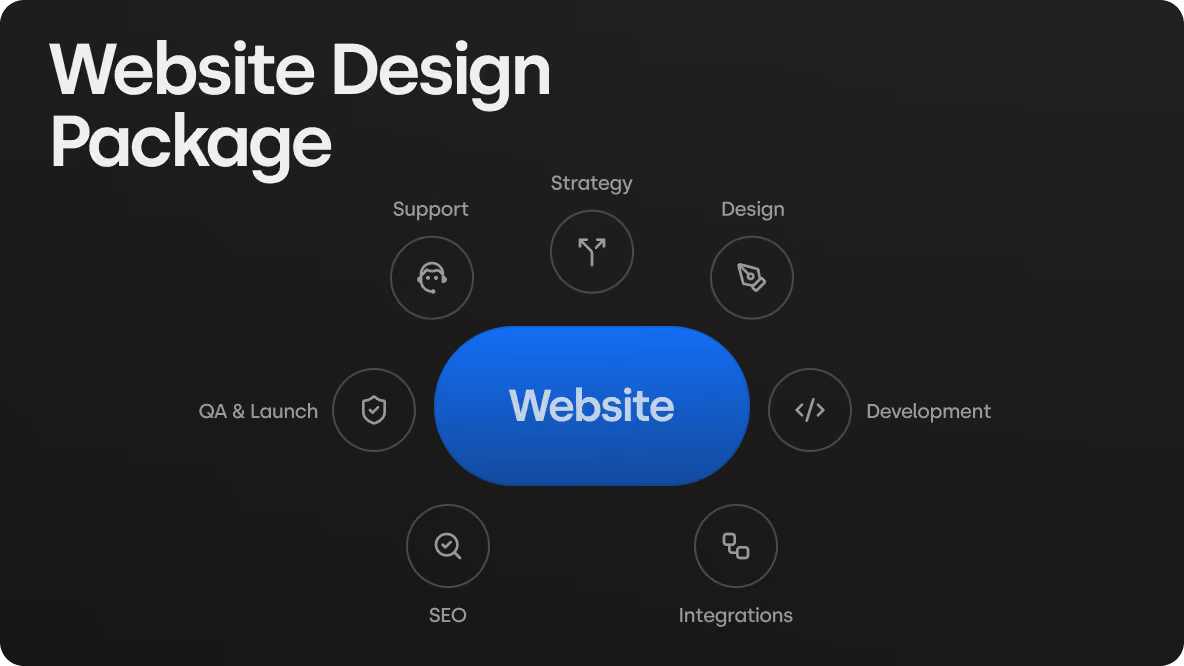
A production-grade agency build covers discovery and information architecture, custom UI/UX design in Figma, responsive Webflow development, multi-template CMS architecture, SEO foundation (metadata, schema markup, sitemap, URL structure, internal linking), integrations, QA, team training, and post-launch support. Copywriting and Webflow hosting are typically separate line items.
Why use a specialized Webflow agency instead of a freelancer?
Agencies absorb coordination risk across design and development, deliver architectural thinking a generalist freelancer rarely brings, and provide accountability that doesn't end at launch. For SaaS companies where the website directly impacts pipeline — and where a poorly built CMS will cost your marketing team hours every week — that structural quality difference is measurable. The technical gap shows up in specifics: class naming conventions that make the codebase maintainable by anyone, CMS collections structured around your actual content model rather than generic patterns, interactions built to stay stable across devices and browsers, and integrations that don't break when your marketing stack changes. The premium is justified when scope is complex, timelines are fixed, or when the site needs to scale beyond the initial launch. Skywwward operates as a boutique agency in this space — senior execution, direct team access, production-grade technical standards, and a process built around handing you a site you can run independently, not one that keeps you coming back.
Does Webflow development include code ownership?
It depends on the agency. Some retain the codebase as leverage for ongoing retainers. At Skywwward, full code and project ownership transfers at handover, unconditionally, on every project.
Is Webflow good for SaaS websites?
Yes, it's the platform of choice for most serious SaaS marketing sites. Discord, Upwork, Rakuten, Zendesk, and Anthropic all use Webflow. It generates clean semantic HTML, scores 80–90 on PageSpeed Insights without additional optimization, gives marketing teams publishing independence, and costs a fraction of custom development to build and maintain. The one area where Webflow has limits is programmatic SEO at very large scale (thousands of pages) and complex application logic, neither of which applies to most SaaS marketing sites.